

Natural Deterrents for Rats in Compost Heaps
Why Rats Find Compost Heaps So Appealing
A compost heap offers a rat the three things it needs most: warmth, shelter and food. A dark, damp pile tucked behind the shed is an ideal nesting site, especially through autumn and winter, when the middle of a working heap can sit several degrees warmer than the air outside. Add a few kitchen scraps to the mix and you have a larder within easy reach of a burrow. The good news is that most rat activity in a compost bin is a symptom of how the heap is being managed rather than an unavoidable part of composting. Change how the heap is run, and the rats usually move on to easier pickings.
Turn the Heap Often and Keep It Working
An active, frequently disturbed heap is the single best deterrent you can build. Rats hate being interrupted, and a nest that gets dug out twice a month quickly becomes a poor investment.
- Turn every two to three weeks with a fork, pulling material from the outside into the centre and breaking up any cavities or tunnels you find.
- Aim for a hot heap. A pile sitting at 55–60°C is too warm and too unpleasant for rats to settle in. Layer roughly equal volumes of "greens" (grass clippings, vegetable peelings, tea leaves, spent plants) and "browns" (scrunched cardboard, paper, woody prunings, dead leaves).
- Keep it as moist as a wrung-out sponge. Dry heaps never heat up, and a cool heap is a cosy heap.
- Choose a lidded bin or covered bay over an open pile. A dalek-style bin with a close-fitting lid is far more rat-resistant than an open heap — a loose lid simply gives them a doorway.
- Site the heap in the open, at least a metre clear of fences, sheds, hedges and walls. Rats dislike crossing exposed ground where they feel vulnerable.
What to Keep Out of the Heap
What goes in matters as much as how you manage it. Rats are opportunists, and cooked food is the strongest invitation you can leave out.
- No cooked food of any kind — leftovers, bread, rice, pasta, pastry, chips, plate scrapings.
- No meat, fish, bones, dairy or fats, including used cooking oil and greasy kitchen paper.
- No pet food, and don't leave bowls of it out overnight near the compost area.
- Rinse eggshells before adding them, and only in small quantities.
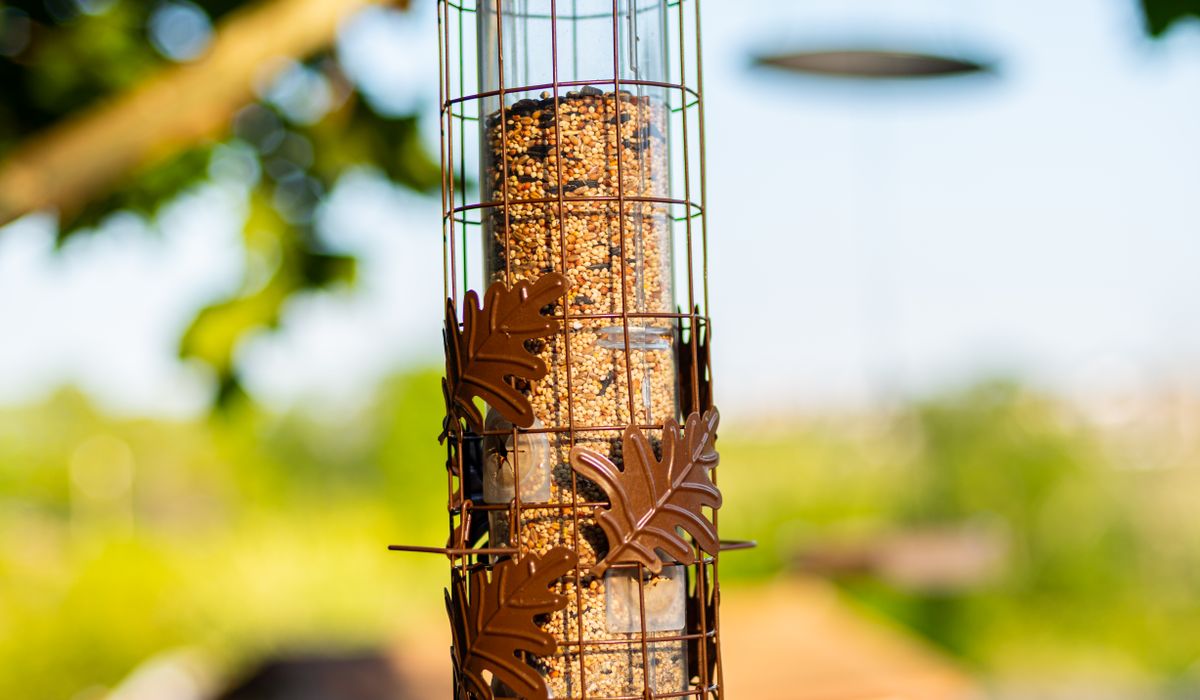
- Clear up around the bin: fallen fruit, spilled bird seed under feeders and loose rubbish all draw rodents in before they ever reach the heap.
Natural Scent Deterrents That Are Safe Around Pets
Rats navigate largely by smell, so strong, unpleasant odours around the base and edges of the heap can encourage them to look elsewhere. These are repellents rather than killers, and they work best alongside good management rather than instead of it.
- Chilli powder or crushed dried chillies sprinkled thinly around the base. Capsaicin irritates sensitive rat noses and feet. Use it sparingly and keep it away from your pets' faces, as it can sting eyes and noses.
- Citrus peel — orange, lemon, grapefruit — scattered around the edges and refreshed weekly.
- Used coffee grounds scattered around the base and stirred into the heap in moderation.
- Garlic and onion skins added to the heap. Rodents dislike the smell of alliums.
- Peppermint oil on cotton rags, tucked into gaps and along runs. Peppermint is a traditional rodent repellent, but essential oils are dangerous to cats in particular, so site rags well out of reach and never apply oils to animals or where pets sleep and groom.
- White vinegar diluted 1:1 with water, sprayed along the base and on hard surfaces where rats travel. Refresh after rain.
Skip ultrasonic repellents — the evidence for them is thin, and they can disturb pets and wildlife. Never use rodenticide or glue traps around a garden compost heap where pets, children and hedgehogs are about: secondary poisoning is a genuine risk, and glue traps are heavily restricted in the UK and deeply inhumane.
Physical Barriers and a Rat-Resistant Base
Deterrents discourage; barriers prevent. If rats have been burrowing into your heap, this is the step that solves it.
- Line the base with galvanised wire mesh of 13mm or smaller aperture, turned up at the edges to form a shallow tray. This stops tunnelling from below and is the most reliable single measure you can take.
- Fit a close-fitting lid or weight a tarpaulin firmly over the top so rats can't push their way in.
- Remove harbourage nearby: trim long grass, clear stacks of timber, old pallets and rubbish that give rats cover while they approach.
- Watch for the tell-tale signs: droppings along the base, greasy smear marks on edges, gnawed corners and smooth worn paths in the grass all mean the heap is being used.
When to Involve the Council or a Professional
In England and Wales, occupiers have a duty under the Prevention of Damage by Pests Act 1949 to keep land free of rats and mice so far as is reasonably practicable. Rats rarely belong to one garden, so it's worth talking to your neighbours — a shared problem needs a shared solution. Your local council's environmental health team can offer advice and, in some areas, subsidised treatment. On a smallholding, store animal feed in sealed metal bins kept off the ground, sweep up spilled grain promptly and keep hedgerows and buildings clear of accumulated junk. Do all of that and your compost can carry on doing its job quietly, without becoming a rat hotel.


Humane Trapping
-
Wasp nests near homes can be dangerous. Learn when to attempt removal yourself and when professional help is the safer option.


Garden Wildlife




-

Long established fact that a reader will be distracted
-

Long established fact that a reader will be distracted
-

Long established fact that a reader will be distracted



Pest Prevention
Karla Gleichauf
12 May 2017 at 05:28 pm
On the other hand, we denounce with righteous indignation and dislike men who are so beguiled and demoralized by the charms of pleasure of the moment
M Shyamalan
12 May 2017 at 05:28 pm
On the other hand, we denounce with righteous indignation and dislike men who are so beguiled and demoralized by the charms of pleasure of the moment
Liz Montano
12 May 2017 at 05:28 pm
On the other hand, we denounce with righteous indignation and dislike men who are so beguiled and demoralized by the charms of pleasure of the moment